Growth should feel exciting, so why do so many sign shops feel overwhelmed?
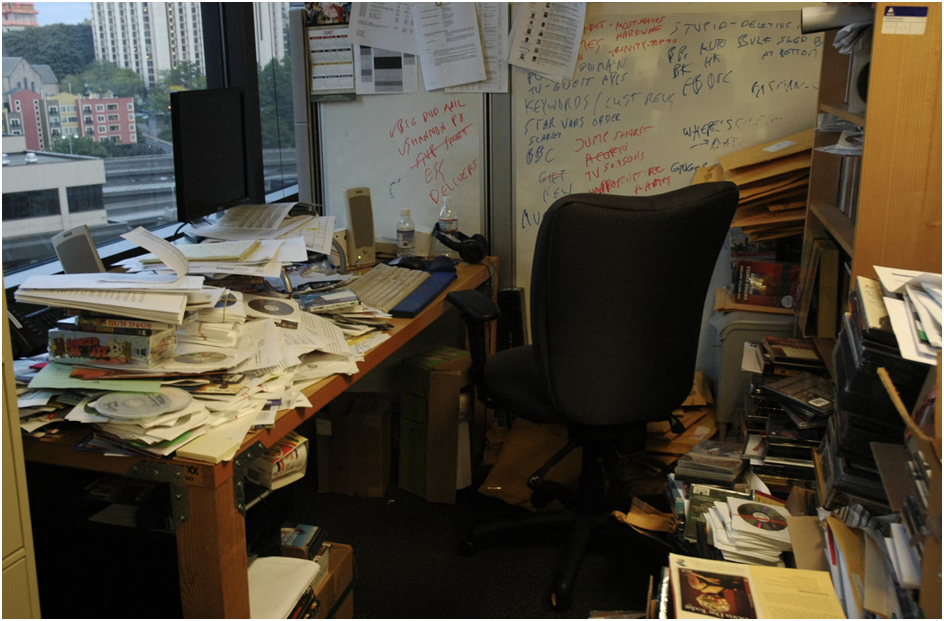
For many sign shop owners, growth arrives with mixed emotions.
On one hand, more inquiries, larger projects, and busier production schedules are positive signs.
Revenue is increasing. The team is stretched. New opportunities are appearing.
On the other hand, many shop owners quietly feel something else:
Exhaustion.
Jobs seem harder to manage than they used to. Install schedules become messy. Team communication feels inconsistent. Quotes take too long to send. Customers ask for updates that no one seems to have.Ironically, the busier the shop becomes, the more disorganized everything feels.
This happens so often that many owners assume chaos is simply part of running a growing sign business.
It is not.
More often, chaos is a symptom of weak business organization.
A sign shop does not suddenly become disorganized overnight. Usually, the problem develops gradually. The systems that worked when the business handled ten jobs per month begin breaking under the weight of fifty.
The result is a shop that feels constantly reactive.
Everyone stays busy.
Yet somehow, things still feel behind.
Why busy does not always mean organized
One of the biggest misconceptions in small business is assuming activity equals productivity.
In reality, many growing sign shops are busy because they are compensating for disorganization.
Employees work longer hours.
Owners answer more questions.
Teams spend extra time correcting mistakes.
Customers require more follow-up.
Nothing appears “broken,” but everything feels harder than it should.
Strong organization in business creates clarity.
Poor organization creates friction.
The difference is often invisible at first—but over time, it affects profitability, employee morale, customer experience, and growth potential. Here are some common signs a sign shop may be struggling with organization:
| Warning Sign | What It Usually Means |
| Jobs constantly running late | Scheduling lacks structure |
| Quotes taking too long | No standardized estimating process |
| Employees asking repeated questions | Roles or workflows are unclear |
| Install mistakes happening frequently | Communication breakdowns |
| Customer approvals getting delayed | Proofing process is inconsistent |
| Owner involved in everything | Business depends too heavily on one person |
Many sign shop owners assume they need more employees, often, they simply need better systems.
The unique organizational challenges sign shops face
Sign shops are operationally complex businesses.
Unlike companies selling a single product or service, signage businesses manage multiple moving parts simultaneously.
A typical project may involve:
- customer consultation
- estimating and quoting
- design revisions
- proof approvals
- production scheduling
- fabrication
- installation coordination
- invoicing and payment collection
Every stage relies on communication.
Every stage has deadlines.
And every stage affects the next.
Without strong systems, information begins living in different places.
- Some details sit inside email threads.
- Install schedules live on calendars.
- Quotes sit in spreadsheets.
- Production notes exist on whiteboards.
- Team updates happen verbally.
Eventually, confusion becomes normal.
The five pillars of business organization for sign shops
Improving organization does not mean adding complexity.
In fact, better organization usually removes unnecessary work.
The most successful sign shops tend to organize around five operational pillars.
1. Clear and repeatable processes
One reason growing sign shops feel chaotic is because everyone handles work differently.
One estimator builds quotes one way.
Another handles customer revisions differently.
Install coordination changes depending on who is available.
When processes are inconsistent, results become inconsistent.
Strong sign shops document repeatable workflows.
For example:
Inquiry → Quote → Approval → Production → Install → Invoice
Every job follows the same path.
This removes uncertainty and reduces avoidable mistakes.
Standardization also makes onboarding employees easier because expectations are clear.
2. Defined responsibilities and accountability
Many growing shops struggle because responsibilities overlap.
When everyone owns everything, no one fully owns anything.
Questions begin surfacing:
- Who follows up on unpaid invoices?
- Who approves production files?
- Who updates job status?
- Who schedules installers?
Without clarity, tasks fall through the cracks.
Good business organization requires defined ownership. Even smaller teams benefit from role clarity.
When responsibilities are clear, communication improves naturally.
3. Templates and standardized workflows
Sign shops repeat similar tasks constantly, yet many rebuild the process every time.
Common examples include:
- quotes
- invoices
- proof approvals
- customer emails
- install checklists
Templates save time while reducing inconsistency.
Instead of recreating estimates manually, teams work from structured systems.
Instead of reinventing communication, proven messaging already exists.
This may sound small, but operational consistency compounds quickly.
4. Better communication systems
Disorganization often looks like poor communication. In reality, communication problems are usually system problems. If employees constantly ask for updates, information is probably hard to access. If customers repeatedly follow up, expectations may not be clear.
Strong communication systems create visibility.
Teams should quickly know:
- job status
- deadlines
- install dates
- approval stages
- customer requests
This reduces interruptions and helps everyone stay aligned.
5. One centralized source of truth
Perhaps the biggest challenge for sign shops is fragmentation.
Many businesses rely on too many disconnected tools:
| Task | Common Tool |
| Quotes | Spreadsheet |
| Scheduling | Calendar |
| Proofing | |
| Payments | Accounting software |
| Job tracking | Whiteboard or Trello |
The problem is not the individual tools, but having to switch between all of them is the issue.
Disconnected systems create delays, miscommunication, and duplicated work.
A centralized workflow creates clarity.
Everyone sees the same information in one place.
That visibility becomes increasingly important as project volume grows.
Why organization becomes the foundation for growth
Growth sounds exciting, but growth without systems usually creates more stress.
This is one reason many owners hesitate to market aggressively. They worry the business cannot handle additional demand.
That fear is often organizational.
When operations feel fragile, more work feels risky.
Strong types of business organization comes down to predictability.
The more predictable the business becomes:
- the easier hiring becomes
- the smoother projects run
- the easier scaling feels
- the less dependent the business becomes on one person
How GarageTool helps sign shops stay organized as they grow
GarageTool was built specifically for wrap and sign shops that need better operational visibility.
Instead of relying on spreadsheets, scattered emails, and disconnected tools, GarageTool centralizes the workflow.
Sign shops can manage:
Estimating and quoting
Create and send professional estimates quickly.
Scheduling and job tracking
Keep installs, timelines, and production visible.
Design proofing
Organize revisions and customer approvals.
Invoicing and payments
Track deposits, invoices, and payment progress.
Customer communication
Keep everything connected to the job itself, because strong organization in business is not about adding more admin work.
It is about reducing confusion.
Better organization creates a calmer, more profitable sign shop
Many sign shop owners assume stress is simply part of growth. As project volume increases, constant interruptions, scheduling issues, and rushed deadlines begin to feel normal.
But the strongest sign shops are not necessarily the busiest, they are the most organized.
When systems improve, work becomes easier to manage. Employees gain clarity around responsibilities, customers experience smoother communication, and projects move through the shop with fewer delays and mistakes. Instead of constantly reacting to problems, owners gain the visibility needed to plan ahead and grow with confidence.
Ready to bring more structure to your sign shop?
GarageTool helps sign shops organize estimating, scheduling, proofing, payments, and customer communication in one centralized system—making growth feel more manageable, not more chaotic.
See how GarageTool can help your sign shop stay organized as it grows.
- ©2026 GarageTool
- Privacy policy
- Terms of service
- Sitemap